Outside central Dubai, life in the UAE runs on cars. Petrol is cheap, motorways are excellent, and used prices are reasonable because expats sell up and leave all the time. That churn is also the risk: plenty of cars on the market have accident history the seller will not volunteer.
The buying process itself is quick: test drive to registered owner in a single day if your paperwork is ready. The trick is knowing which checks to run before you hand over money, and the order of the official steps.
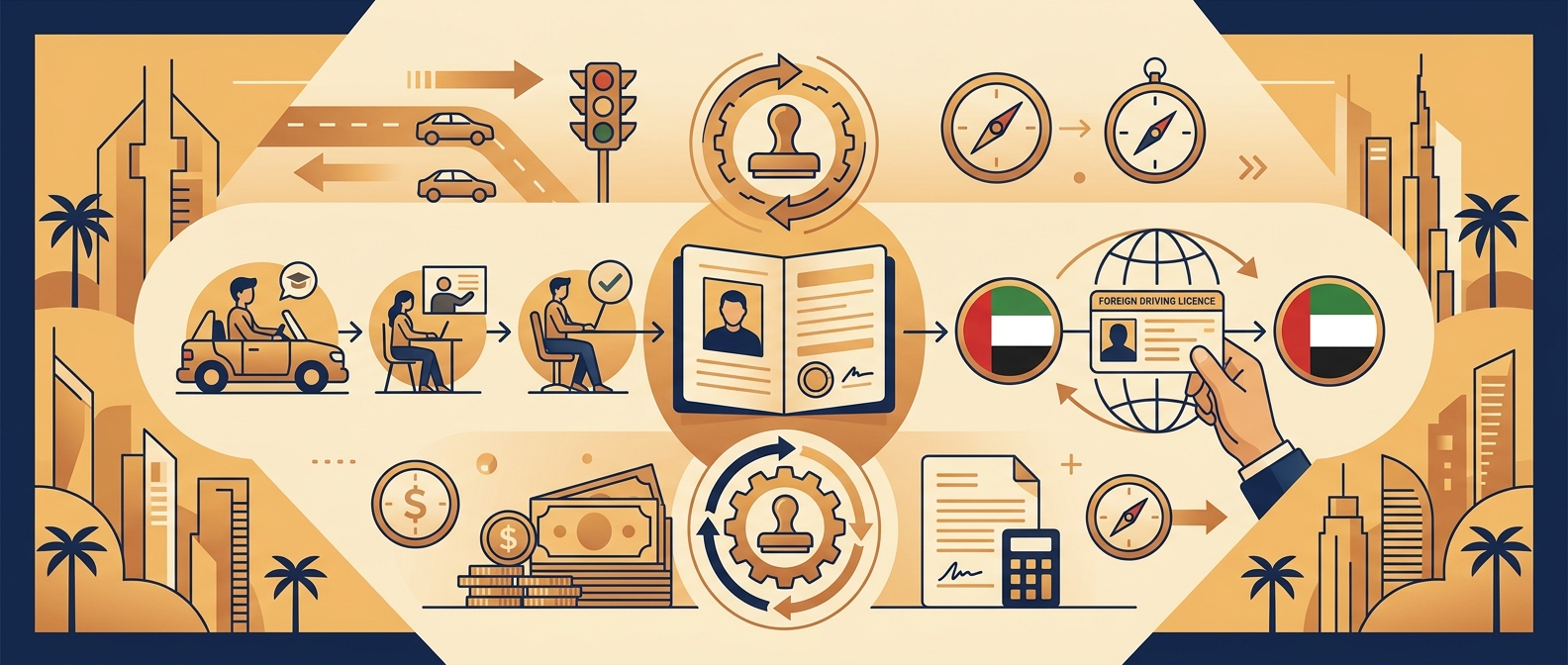
One thing first: you need a UAE driving licence to register a car in your name. If you have not converted yours yet, start with our UAE driving licence guide.
New or used: what your money buys
New cars come from official dealers with a manufacturer warranty, usually 3 to 5 years, and often a service contract. Dealers discount at quarter-end and during Ramadan and summer campaigns. Ask for the service contract and registration to be thrown in before you ask for money off.
Used cars come from three places:
- Dealer or certified pre-owned. Most expensive used option, but the car is inspected, often carries a short warranty, and the dealer handles the transfer paperwork.
- Online marketplaces and car supermarkets. Platforms that buy, recondition and resell, with fixed prices and return windows. Convenient, priced accordingly.
- Private sale. Cheapest, and where the bargains and the horror stories both live. Everything below applies double here.
A three-year-old car has typically lost a large slice of its showroom price, so the used market is where the value sits.
Checking a used car before you pay
Never rely on the seller's word. Run these steps on any private or small-dealer purchase:
- Pull the accident and history report. Paid providers check UAE records for reported accidents, insurance claims and odometer readings. A report costs roughly AED 50 to 100 and has killed many bad deals for the price of a lunch.
- Pay for an independent inspection. A workshop or mobile inspection service checks paint depth, chassis, gearbox and electronics for around AED 200 to 500. If the seller resists an inspection, walk away.
- Check for outstanding finance and fines. A car with a bank loan against it cannot be transferred until the loan is cleared, and unpaid traffic fines block the transfer too.
- Match the chassis number on the car to the registration card, and confirm the seller's name is on that card.
If a deal goes wrong after purchase, you have more protection than most buyers realise. See your rights when buying a used car in the UAE for what consumer law covers.
Paying for it: cash, loan and the 20% rule
UAE Central Bank rules cap car loans at 80% of the vehicle price, so budget a 20% down payment in cash. Loans usually run 1 to 5 years, and banks want a salary certificate, bank statements and your Emirates ID. Advertised flat rates understate the true cost, so compare the reducing-rate equivalent.
Insurance is not optional and it comes before registration: the RTA will not register a car without a valid policy. Comprehensive vs third-party is a real decision with real money attached, covered in our UAE car insurance guide.
The mulkiya: transfer and registration
The mulkiya is the vehicle registration card, and transferring it is what makes the car legally yours. The sequence:
- Seller clears any loan and pays outstanding fines.
- You buy insurance in your name using the car's details.
- If the car is more than 3 years old, it must pass a technical inspection at an RTA-approved testing centre, roughly AED 150 to 200. Confirm current fees on the RTA site or app.
- Both parties complete the transfer at an RTA centre or through the app. The transfer and new mulkiya cost roughly AED 350 to 400 plus plate fees if you change plates.
Registration then renews every year, and cars over 3 years old repeat the inspection at each renewal. Ongoing costs are broken down in Salik, parking and petrol costs.
Key takeaway
A history report and an independent inspection cost under AED 600 combined and are the difference between a good used buy and someone else's accident write-off. Insurance must be in place before the RTA will transfer the mulkiya, and cars over 3 years old need a passing test first.
FAQ
Can I buy a car in the UAE on a visit visa?
No. Registering a car in your name requires UAE residency and a UAE driving licence. Tourists rent instead.
How much deposit do I need for a car loan?
At least 20% of the price in cash, because banks can only finance 80% under Central Bank rules. Expect to show a salary certificate and recent bank statements.
What is a mulkiya?
The vehicle registration card issued by the RTA (or the equivalent authority in other emirates). It names the legal owner and must be renewed yearly, with a technical inspection once the car is over 3 years old.
Should I buy in Dubai or Sharjah?
Cars are often slightly cheaper in Sharjah, but you must register the car in the emirate where your residency or licence sits, and inter-emirate transfers add steps. Factor in where you live and commute, not just the sticker price.