The sticker price of a car tells you little about what driving in Dubai costs. The real number is monthly: petrol, Salik tolls, parking, insurance and the slow drip of fines. For a typical commuter that lands somewhere around AED 800 to 1,500 a month before loan payments.
Here is how each piece works, and where people overspend without noticing.
What is Salik and how much does it cost?
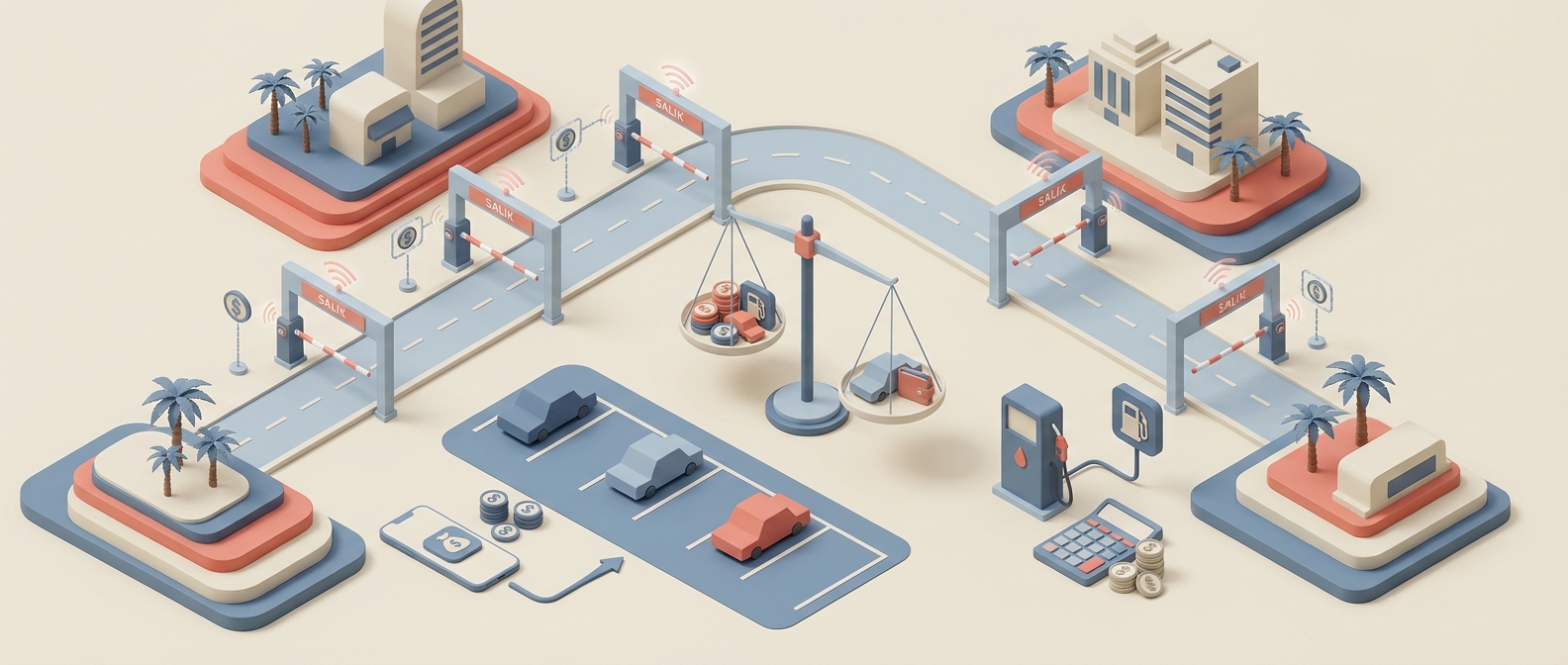
Salik is Dubai's automatic road toll system: a prepaid tag on your windscreen is charged every time you drive under one of the toll gates on major roads, with no barriers and no stopping. Under variable pricing, each crossing costs AED 4 to 6: AED 6 at peak hours, AED 4 off-peak, and free in the late-night window at most gates. The tag costs around AED 100 including starter credit, and your account must stay topped up or fines follow.
Salik: the toll you never stop for
Salik is Dubai's electronic toll system. There are no barriers and no cash. A small tag on your windscreen is read automatically as you pass under a toll gate on roads like Sheikh Zayed Road and the bridges over the Creek.
- Each gate crossing costs around AED 4 to 6, since Dubai moved to variable pricing: more at peak hours, less off-peak, and free in the late-night window at most gates. Confirm current rates and timings on the Salik website or app.
- The tag itself costs around AED 100 including starter credit, from petrol stations or the Salik app.
- Your account is prepaid or linked to a card. Crossing with an empty account triggers fines, so switch on auto top-up.
The trap is routing. A commute that crosses two gates each way at peak pricing can cost AED 400 or more a month in tolls alone. Google Maps and Waze can route around gates; sometimes ten extra minutes saves real money, sometimes it burns more petrol than it saves. Do the maths once for your actual route.
Parking: zones, apps and the fines that add up
Public street and car-park spaces in Dubai are paid in zoned areas, managed by Parkin. Rates run roughly AED 2 to 4 per hour in standard zones and more in premium zones near business districts, with higher event pricing in a few hotspots. Confirm zone rates in the Parkin or RTA app.
- Pay by app (Parkin, or RTA services in DubaiNow) or by SMS. The app reminds you before time expires, which alone pays for itself.
- Public parking is generally free on Sundays and public holidays, but check the signage, as some zones charge every day.
- A parking fine costs far more than a full day of paid parking, so never gamble on "just ten minutes".
If you rent a flat, check whether a parking bay is included. In towers without one, a rented bay can add hundreds of dirhams a month, a line item people forget when comparing flats. Our cost of living in Dubai guide shows where this fits in a full monthly budget.
Petrol: cheap, but not free
UAE fuel prices are set once a month by the national fuel price committee and every station charges the same. In recent years Special 95 has moved roughly between AED 2.5 and 3.2 per litre. Check the announced price at the start of each month.
Quick maths for a typical commuter: 60 km a day, 22 working days, at about 8 litres per 100 km works out to roughly AED 300 to 400 a month. An SUV or a long cross-emirate commute can double that. Commuting from Sharjah changes the numbers and the traffic entirely, weighed up in living in Sharjah, working in Dubai.
The full monthly picture
For a mid-size car on a Dubai commute, a realistic 2026 budget looks like:
- Petrol: AED 300 to 500
- Salik: AED 100 to 400 depending on route and timing
- Parking: AED 0 to 400 depending on home and office arrangements
- Insurance: AED 150 to 300 monthly equivalent, see our car insurance guide
- Servicing and registration: AED 100 to 200 averaged over the year
Fines are the wildcard. A couple of speeding cameras a month wrecks any budget, and the points cost more than the money, as explained in UAE traffic fines and black points. If the total makes you wince, the Metro is genuinely good along its lines: see Dubai public transport.
Key takeaway
Budget AED 800 to 1,500 a month to run a car in Dubai before any loan payment, with Salik and parking the two costs most people underestimate. Set Salik to auto top-up, pay parking by app, and price your actual commute route once instead of guessing.
FAQ
How much is a Salik gate crossing?
Around AED 4 to 6 per crossing under the variable pricing system, with cheaper off-peak and free late-night windows at most gates. Confirm the current schedule on the Salik app or website.
How does Salik work?
A small RFID tag on your windscreen is read automatically as you pass under a toll gate, and the crossing fee is deducted from your prepaid Salik account. There are no barriers, no cash and no need to slow down; you register the tag to your car plate once and top up the account.
How do I check my Salik balance?
Open the Salik app or log in at salik.ae to see your balance, crossings and any fines. Switch on auto top-up or low-balance alerts, because crossing a gate with an empty account triggers a fine per trip.
Do I pay Salik in a rental car?
Yes. Rental companies pass through your crossings, often with an admin fee per gate on top. Ask for the fee schedule before you drive off.
Is parking free anywhere in Dubai?
Most malls offer free parking for initial hours, many residential streets outside zoned areas are free, and public zones are generally free on Sundays and public holidays. Always read the zone sign.
Why did my petrol budget change this month?
UAE pump prices are recalculated monthly against international markets, so the per-litre price moves at the start of each month. Every station charges the same regulated price.