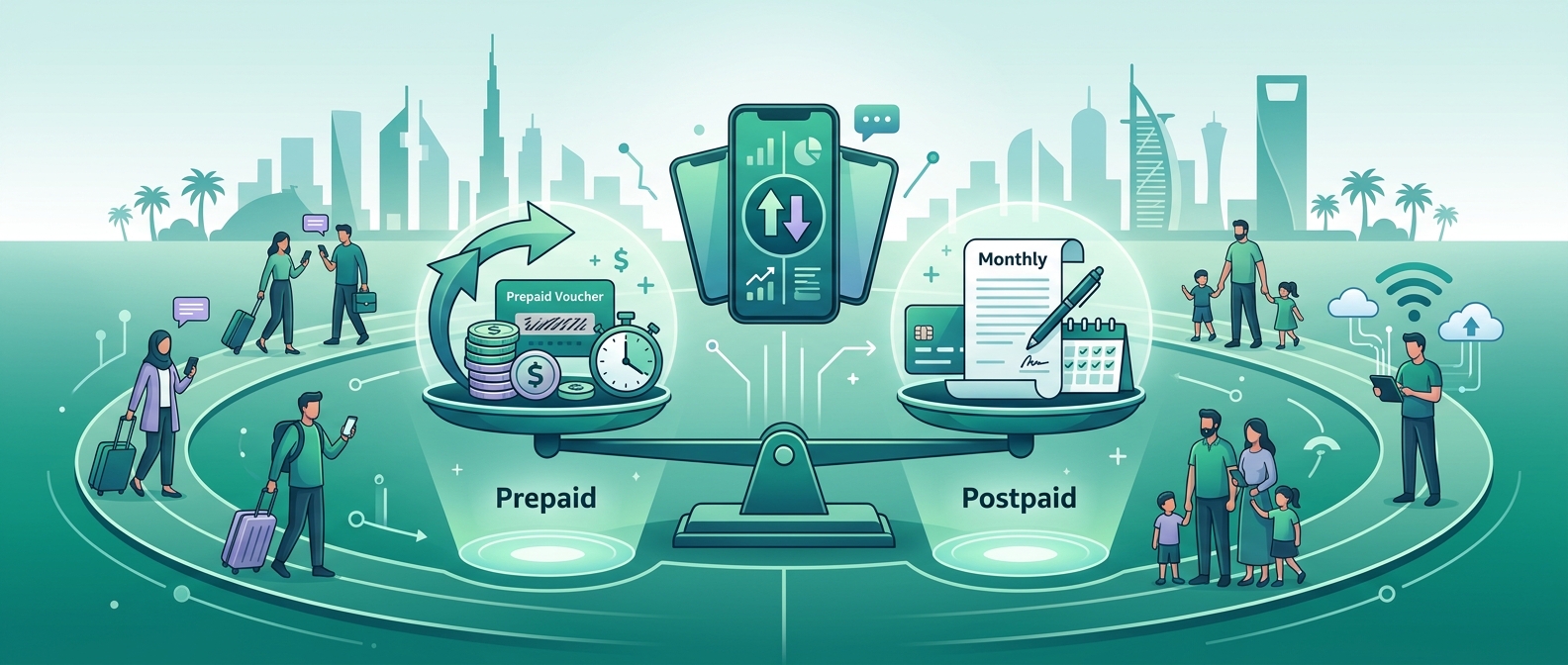
The UAE mobile market is small: two networks, etisalat by e& and du, plus Virgin Mobile UAE, a digital brand on du's network. Coverage is excellent in every major city, so the real decision is which plan type matches how you live.
The trap most newcomers fall into is signing a 12-month postpaid contract in week one, before they know their real data usage or calling habits. This guide compares plan types and the criteria that matter, so you can decide once and not pay exit fees later.
The three providers in one minute
etisalat by e& is the older operator with the widest retail footprint. If you want to sort a problem face to face, it has the most branches.
du is the second full network, generally positioned as the value option, and it carries most of the newer bundled home-and-mobile offers.
Virgin Mobile UAE is app-only and sits on du's network, so coverage is identical to du. You build your own plan in the app, change it monthly, and it issues eSIMs quickly without a shop visit.
There is no meaningful coverage gap between the two networks in Dubai, Abu Dhabi or Sharjah, so the network question is settled for most residents. Pick on plan structure and price, not signal.
Prepaid vs postpaid: the real trade-offs
Prepaid means you top up and buy bundles as you go. New arrivals can get a prepaid SIM on a passport alone, which is why it is the standard first step. There is no contract, no credit check and no exit fee, but per-unit rates outside bundles are poor.
Postpaid means a monthly bill, usually with more data per dirham, bundled international minutes and better roaming packs. You need an Emirates ID to sign up, and many postpaid plans carry a 12-month commitment with an early exit fee, though no-commitment monthly options exist on all three providers.
A simple rule of thumb:
- First month in the UAE: prepaid. You cannot get postpaid without an Emirates ID anyway. See the arrival sequence in our SIM card and home internet guide.
- Months two to three: track your actual data and international-calling usage in the provider app.
- After that: move to postpaid only if a bundle clearly beats your prepaid spend, and prefer a monthly plan unless a device instalment justifies the 12-month lock.
The criteria that actually separate plans
Prices change often, so compare on structure and confirm current figures on the provider sites. The variables that decide value:
- Data allowance and rollover. Some plans roll unused data into the next month, some do not. Rollover is worth real money if your usage swings.
- Local vs flexible minutes. Cheaper plans give local minutes only. If you call home regularly, a plan with bundled international minutes to your specific country usually beats buying calling cards or paying per-minute rates.
- Roaming packs. If you travel for work, check what a GCC or global roaming pack costs on each provider before choosing. Roaming without a pack is expensive everywhere.
- 5G access. All three offer 5G, but some entry-level plans cap speeds or exclude it. Check the plan detail, not the headline.
- Contract length and exit fee. A discount that requires 12 months is only a discount if you stay 12 months.
- Device bundles. Instalment plans are convenient but tie you in. Price the phone separately first.
Mid-range postpaid plans commonly sit in the AED 100 to 300 per month band depending on data and minutes; confirm current pricing on the etisalat by e&, du or Virgin Mobile sites before committing.
Switching providers and keeping your number
Mobile number portability works in the UAE. You can move your number between etisalat by e& and du (Virgin Mobile included) by applying with the new provider, who handles the transfer. Clear any outstanding postpaid balance first, and check for an exit fee before you jump.
A phone line is a small slice of monthly costs here. If you are still building your overall numbers, our cost of living in Dubai breakdown puts telecoms in context alongside rent and transport.
Key takeaway
Start prepaid on a passport, measure your real usage for two months, then move to postpaid only if a bundle beats your actual spend. Coverage is near-identical between the networks, so choose on plan structure, not signal.
FAQ
Can I get a UAE mobile plan without an Emirates ID?
Only prepaid. Tourist and new-arrival prepaid SIMs are issued on a passport at the airport and in malls. Postpaid requires an Emirates ID, so most people start prepaid and switch later.
Is Virgin Mobile's coverage worse than du or etisalat?
No. Virgin Mobile UAE runs entirely on du's network, so coverage and speeds match du. The difference is the experience: app-only sign-up, flexible monthly plans and quick eSIMs.
Can I keep my number if I switch providers?
Yes. Mobile number portability lets you move your number between networks. Apply with the provider you are joining, settle any final bill, and check for exit fees if you are inside a contract term.
Do UAE mobile plans include WhatsApp and internet calls?
WhatsApp messaging and data use work normally on every plan. Voice and video calling over some apps is restricted at network level; the providers sell licensed internet-calling packages instead. Our VPN legality guide covers the rules.