Search for a UAE freelance visa and you will see quotes from AED 500 to AED 25,000 for what sounds like the same thing. It is not. Almost every guide blends three separate products into one price, and buying the wrong one wastes thousands of dirhams.
The three: free-zone freelance packages (permit plus optional residence visa), the federal MOHRE freelance permit (a work permit, not a visa), and licence-only packages for people who already hold UAE residency. Which one you need depends on one question: what visa are you standing on today?
Which route fits you
| Your situation | The right product | Typical cost | Visa included? |
|---|---|---|---|
| On a spouse's or parent's visa | Zero-visa free-zone licence (e.g. Shams) | AED 5,500-7,500 per year | No, you keep your existing one |
| Employed in the UAE, freelancing on the side | MOHRE freelance permit | AED 500 for two years | No, your employment visa stays |
| Overseas, moving to freelance full-time | Free-zone permit + visa bundle | AED 12,000-20,000 first year all-in | Yes, usually two years |
| Overseas, on a tight budget | MOHRE permit + own residence route | Under AED 8,000 first year all-in | Yes, arranged separately |
| Working remotely for one foreign employer | Not a freelance permit at all | AED 1,500-1,700 government fees | Yes, one year |
That last row catches a lot of people. If your only client is your own employer abroad, you want the remote work visa, not a freelance package. Freelance permits are for selling to multiple clients, including UAE ones.
The three tiers in detail
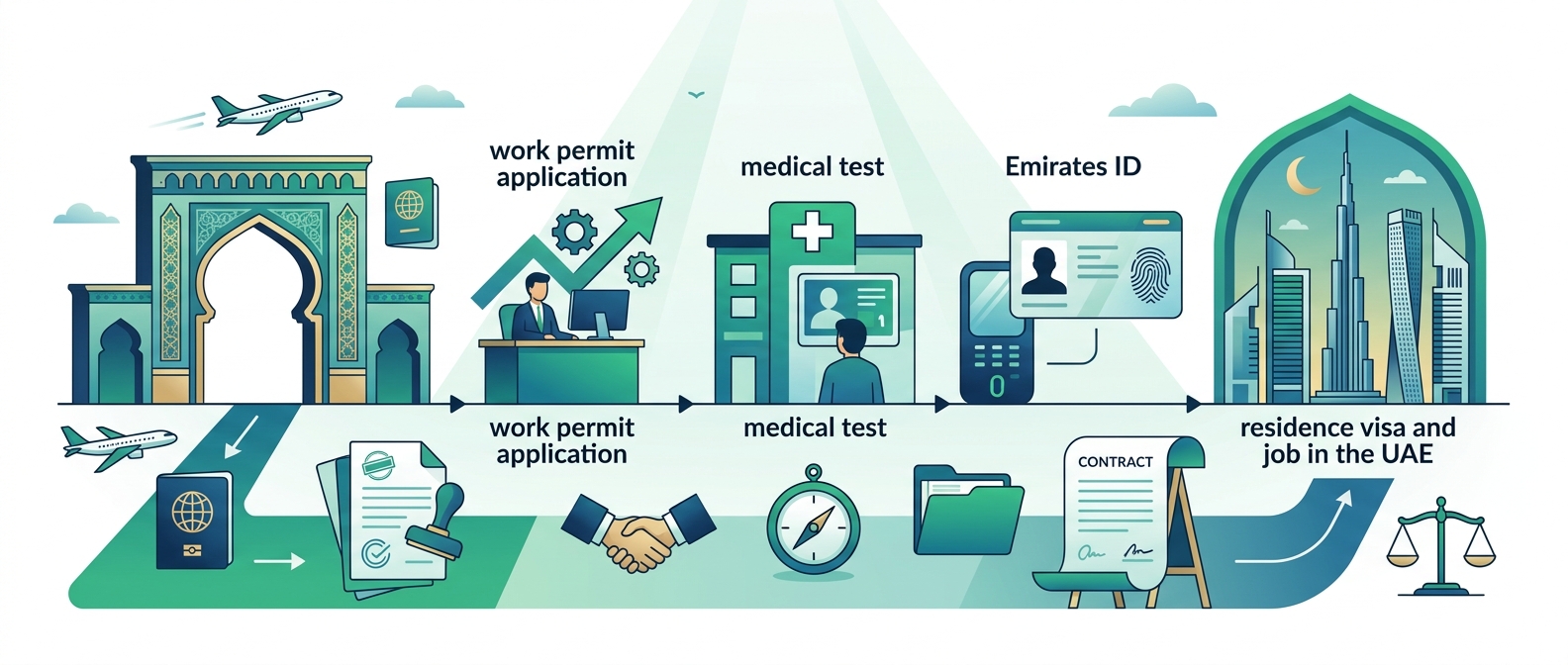
Tier 1: free-zone freelance packages. Zones such as Dubai's GoFreelance scheme (the TECOM zones including Media City and Internet City), twofour54 in Abu Dhabi, IFZA, RAKEZ and Fujairah Creative City sell freelance permits for AED 5,500 to 25,000 per year depending on zone and activity. GoFreelance sits around AED 7,500 to 12,500. The visa is extra: an establishment card at roughly AED 2,000-2,500, plus entry permit, medical, Emirates ID and insurance. The only route that hands you permit, visa and business address in one transaction.
Tier 2: the MOHRE freelance permit. The federal mainland permit, introduced in 2022 and barely mentioned in most guides. For existing UAE residents it costs about AED 500 for two years and leaves your current sponsorship untouched. A standalone version exists for people arranging their own residence: permit fees of roughly AED 1,200-2,500 plus standard visa costs, keeping a one-year cycle under AED 5,000-8,000 all-in. It covers a defined activity list, delivered by you personally.
Tier 3: zero-visa licences. If you already hold residency through family sponsorship, a golden visa or a green visa, nobody needs to sell you a visa. Zones like Shams offer licence-only packages at AED 5,500-7,500 per year. Your existing visa carries on and you skip every visa-related fee.
Prices move each year, so treat these as planning ranges and confirm the current figure on the zone's site or the MOHRE app before paying.
What the permit does, and does not, let you do
The permit makes it legal to invoice clients as an individual, sign contracts in your own name and market your services, but only for the activities written on the permit. Adding activities later costs extra, so get the wording right on day one.
It does not make you a company. You cannot hire employees, and a free-zone permit is not a mainland trade licence. A permit alone also gives you no right to live in the UAE: residence comes from the attached visa or the one you already hold. And a salaried UAE job later needs its own work permit; freelance paperwork does not transfer.
Employed and taking the AED 500 MOHRE route? Check your contract first. MOHRE has relaxed the formal no-objection requirement for many permit types, but most UAE contracts still restrict outside work. Get your employer's consent in writing before your first invoice.
Invoicing, banking and the tax link
Larger UAE clients will ask for your permit number before paying an invoice, so keep a template ready with your name, permit number and activity.
Open a separate bank account for freelance income. Traditional banks often want the permit plus a letter from the issuing zone; digital-first banks are usually the fastest to say yes. Mixing client payments into a personal account muddies the next point.
Freelancing is a business for tax purposes. Once turnover passes AED 1 million a year you must register for corporate tax, and 9% applies to profit above AED 375,000. VAT registration kicks in at AED 375,000 of taxable turnover. The corporate tax guide for freelancers covers deadlines and the small business relief that shields most solo freelancers from actually paying.
The upgrade path: green visa
The free-zone visa runs two years and stays tied to the zone. Once your freelance income reaches AED 360,000 a year, you qualify for the five-year self-sponsored Green Visa freelancer route: fewer renewals, no zone dependency, the natural second step once freelancing becomes a real business.
Freelancers on any tier can sponsor a spouse and children once income meets the standard thresholds, proven by bank statements rather than a salary certificate. There is a walkthrough for keeping family sponsored on a freelance visa after job loss.
Key takeaway
Identify your tier before you compare prices. Existing residents need a licence (AED 5,500-7,500) or the AED 500 MOHRE permit, not a visa package. Newcomers choose between the full free-zone bundle at AED 12,000-20,000 for year one and the MOHRE route under AED 8,000, then aim for the green visa at AED 360,000 income.
FAQ
How much does a freelance visa cost in Dubai?
It depends which product you need. Existing residents pay AED 500 for a two-year MOHRE permit or AED 5,500-7,500 for a licence-only package. A full free-zone permit plus residence visa runs AED 12,000-20,000 in year one, insurance included. Confirm current prices with the issuing zone.
Can I freelance while employed in the UAE?
Yes. The AED 500 MOHRE freelance permit is built for exactly this and leaves your employment visa untouched. Your contract may still restrict outside work, so get written employer consent before invoicing anyone.
What is the difference between a freelance visa and a remote work visa?
A freelance permit lets you sell to multiple clients, including UAE companies. The remote work visa is for people employed by, or running, a business entirely outside the UAE, with no UAE clients. If your only income is one foreign employer, the remote work visa is cheaper and simpler.
Do freelancers pay tax in the UAE?
There is no personal income tax. Corporate tax registration is required once business turnover passes AED 1 million a year, with 9% charged on profit above AED 375,000; VAT registration applies above AED 375,000 in taxable turnover. Most solo freelancers register but pay nothing thanks to small business relief.